


Buyer guide with Robert Olivas
Earnest Money in California: How It Works and When You Lose It
By Robert Olivas, NMLS #271447, The Brandon Drew Group, a division of New American Funding Last reviewed November 2026
Quick answer
Earnest money is a deposit you put into escrow after the seller accepts your offer. It shows you are serious, it is usually held by the neutral escrow holder named in your contract, and it is credited toward your costs at closing. You may lose it if you back out after your contingencies are gone and have no legal reason. The amount is negotiated.

Key points
- Earnest money is a good-faith deposit. It is not an extra cost. If the sale closes, it is credited to you.
- It is different from your down payment. The deposit is a first piece paid early. The down payment is the full amount you put toward the price at closing. The deposit usually counts toward it.
- The escrow holder named in your contract usually holds the money, not the seller and not the agent. Your contract names the holder.
- The amount is negotiated between the buyer and seller. Your agent will advise based on the local market.
- Your contingencies protect your deposit. The risk rises when you remove them, so know what each one covers before you remove it.
On this page (13 sections)
Why this deposit worries so many buyers
You find a home. You write an offer. The seller says yes. Then someone asks you to wire a deposit within a short time, and you wonder where the money goes and whether you can get it back.
That worry is fair. For many buyers, this is the first large payment they make toward the home, and it happens before the loan is final. The paperwork can look scary. Words like "liquidated damages," "release of funds" and "contingency removal" show up in the contract. Nobody explains them unless you ask.
This guide explains earnest money in plain words. It is part of our series on Buying your first home in Rancho Cucamonga. It covers what it is, who holds it, how the amount is set, what the California law says, when you are protected, and when you are not. It is written for a buyer in California, and for a buyer around Rancho Cucamonga in particular.
One honest note first. We are a mortgage lender, not a law firm and not your real estate agent. Your purchase contract is a legal document. Your agent can explain how the market works. A real estate attorney can tell you what your specific contract means. We can tell you how the loan side connects to the deposit, because that is where we work every day.
Earnest Money in California: How It Works and When You Lose It
Earnest money is a deposit a buyer makes after the seller accepts an offer. It is also called a good-faith deposit or an initial deposit. It tells the seller you mean it, and it gives the seller some comfort while the home is off the market during escrow.
Escrow is the period between an accepted offer and closing, and also the neutral service that handles the money and documents. An escrow officer follows written instructions from both sides. The escrow officer does not take sides.
Here are the things people most often get wrong.
It is not the down payment. The down payment is the total cash you put toward the price at closing. Earnest money is usually an early part of it. The deposit is usually counted toward your cash to close, but the two words are not the same. If you only budget for a down payment, you may forget that part of that money must move earlier.
It is not a fee. If the sale closes, the money is not lost. It is credited to you. You do not pay it twice.
It is not always lost if you cancel. If you cancel for a reason your contract allows, such as a contingency you still have, you may get the deposit back. If you cancel without a reason the contract allows, the seller may be entitled to keep it. The contract controls.
It is usually not held by the seller. In general, the deposit goes to a neutral escrow holder. Your contract names which one.
It is not a rule that everyone pays the same. The amount is negotiated. We explain that below.
Who holds the money
In most California home purchases, the deposit goes to the escrow holder named in the purchase contract. That is usually an escrow company, a title company's escrow department, or an attorney. Your contract sets who holds the deposit and what the holder must do, so read the deposit paragraph in the form you sign.
Why does this matter? Because the escrow holder is neutral. It does not release the money because one side asks. It follows the written instructions in the contract and any signed instructions from both buyer and seller. If the two sides disagree, the escrow holder generally waits for either a signed agreement, a court order, or another step your contract sets.
A few practical points:
- Ask for a receipt. When your deposit arrives, escrow should confirm it in writing. Keep that receipt.
- Check the instructions. Your agent will give you wiring or delivery instructions. Before you send money, call the escrow office on a phone number you found independently, such as one printed on the contract, and confirm the instructions. Wire fraud is a real risk in real estate. The FBI's Internet Crime Complaint Center (IC3) advises using a second channel to verify any request to change account or payment details. If money was already sent, it advises contacting your bank right away to ask for a recall and filing a report at ic3.gov (FBI IC3 public service announcement, checked October 28, 2026).
- Never wire money because of an email alone. If an email changes the account number at the last minute, stop and call.
- Know the name. Write down the name of the escrow company and the escrow officer. You will deal with them often.
How much earnest money is normal
There is no single set amount for earnest money in California. It is negotiated between the buyer and the seller, and it is written into your offer. In some markets and for some homes, buyers offer more to look stronger. In other situations, a smaller amount is accepted.
We will not give a number here, because any number could be wrong for your home, your price range and the month you read this. Your agent will advise based on the local market.
What goes into the decision:
| What affects the amount | Why it matters |
|---|---|
| How competitive the local market is | When many buyers want the same home, a seller may favor an offer that looks more committed |
| The price of the home | A larger purchase often means a larger deposit in dollars |
| Your contingencies | An offer with fewer protections may be paired with a stronger deposit to show commitment |
| What you can comfortably put in early | The deposit must be real cash you can send quickly. Do not stretch it so far that you have no cushion |
| Local custom and the seller's wishes | Agents in your area know what sellers there expect |
| Your overall cash to close | The deposit is part of your total cash, not extra on top |
A useful way to think about it: the deposit is a trade. A larger deposit can make an offer look more serious, but it also puts more of your money at risk if the deal falls apart for a reason the contract does not protect. Talk with your agent about how much risk you are comfortable with, and ask them to explain what happens to the deposit in each case.
We can help with one piece. Before you write an offer, ask us to look at your cash. We can show you how the deposit, your cash to close and your cushion fit together, so you are not scrambling for money in the middle of escrow. For more on that first step, read Pre-approval vs. pre-qualification.
California Civil Code 1675 in plain words
California has a law that speaks to deposits in some home purchases. It is Civil Code section 1675. Here is what it means in plain words, based on public copies of the code checked November 2, 2026.
First, some background. Many purchase contracts include a "liquidated damages" clause. "Liquidated damages" is a legal term for an amount of money the buyer and seller agree to in advance. It is the amount the seller may keep if the buyer breaks the contract. The idea is that if a buyer walks away without a legal reason, it is hard to measure exactly what the seller lost. So the two sides agree on a number ahead of time.
Section 1675 covers a certain kind of sale:
- A residential property of up to four units.
- A buyer who intends to live in it (or in one of its units). That means owner-occupied.
- A liquidated damages amount that was actually paid, which is the deposit.
For that kind of sale, the law says that if the amount is no more than 3% of the purchase price, it is presumed valid. In plain words, a court starts by assuming the amount is fair, unless the buyer shows it is unreasonable. If the amount is above 3%, the clause is invalid unless the side who wants to enforce it shows the amount is reasonable.
The clause also has to meet form rules. Under Civil Code section 1677, it must be separately signed or initialed by each party. If the clause is in a printed contract, it must be in at least 10-point bold type or contrasting red print in at least 8-point bold type. A clause that doesn't meet these rules is invalid.
Here is what that means for you:
- A deposit within the limit is more likely to be treated as valid. That is a starting point for a court, not a promise of any outcome.
- A liquidated damages amount above 3% is invalid unless proven reasonable. The side enforcing it, usually the seller, has to show the amount is reasonable.
- The law covers a special kind of damages clause. It does not decide whether you are allowed to cancel in the first place. Your contract and your contingencies decide that.
- It applies to owner-occupied homes of up to four units. If you are buying an investment property, your situation may be different. Ask an attorney.
We want to be careful. We are not attorneys, and a short summary like this cannot cover every case. Courts decide disputes on their facts, and the contract language matters. This is general information, not legal advice; ask a real estate attorney about your contract.
Contingencies: your legal exits
A contingency is a condition in the contract. If the condition is not met, and you act inside the time the contract allows, you may be able to cancel and keep your deposit. Think of each contingency as a door. While it is open, you have a way out. When you remove it, the door closes.
The common ones are below. Names, wording and time limits depend on the contract form your agent uses, so read yours.
Inspection (or investigation) contingency. This gives you time to have the home inspected and to review reports. If you find something you do not accept, you may be able to ask for repairs, ask for a credit, or cancel, according to the contract.
Appraisal contingency. An appraisal is a professional opinion of what the home is worth, ordered through your lender. If the appraisal comes in below the price, this contingency can give you options, such as negotiating or canceling, depending on the contract.
Loan contingency. This one is close to our work. It says the purchase depends on you getting the loan. If you cannot get approved within the contract's terms, you may be able to cancel and keep your deposit. If you remove it too early and the loan does not come together, you may be at risk. Read What underwriters look for so you know what the lender will review before you take that step.
Sale of another home, title, and other contingencies. Some contracts have conditions about title, disclosures, or the sale of your current home. Your contract lists the ones that apply to you.
How removing contingencies changes your risk
| Stage | What you may have | What is at risk |
|---|---|---|
| Contingencies still in place | A contract-based way out for each open item, if you act inside the written time | Missing a written deadline can end the protection |
| Some contingencies removed | Fewer exits; the ones left still protect you | The deposit is more exposed to the items you removed |
| All contingencies removed | Little or no contract-based exit | Backing out may put your deposit at risk |
| After closing | Not applicable | The deposit has been credited to you |
The key point: removal is a decision. Your agent will ask you to sign a form that removes a contingency. Before you sign, ask three questions:
- What does this contingency protect me from?
- What is still unknown?
- If I remove it and something goes wrong, what happens to my deposit?
For the loan contingency, ask us whether your loan is approved, or whether underwriting is still working. "Underwriting" means the lender's final review of your income, assets, debts, credit and the home. New American Funding's underwriters must verify those things; a pre-approval is not a final approval. We can tell you where your file stands in plain words, so you and your agent can decide. We usually update you with a call at each milestone, email updates and a weekly check-in, and you can follow along in New American Funding's portal or app. We cannot promise any outcome or any date.
How buyers lose a deposit
Buyers who lose a deposit usually fall into a few patterns.
They remove contingencies and then do not close, without a legal reason. Once the doors are closed, a change of mind, nerves or a better home may not be a reason the contract recognizes.
They miss a deadline. Contingencies run on dates written in the contract. If you do not act in time, you may lose the right to use them. Your agent should keep a calendar of these dates. Ask to see it.
They cannot get the loan after removing the loan contingency. If the loan falls through for a reason the buyer is responsible for, and the contingency is gone, the seller may have a claim to the deposit.
They cannot close on time. If funds, documents or approvals are not ready by the date in the contract, the seller may give written notice and the contract may be at risk. Your contract sets how notice works.
They do not send the deposit on time. Sending the deposit late can itself break a term of the contract. Ask your agent for the due date and the method.
They change something about their finances during escrow. A new job, a large purchase, new credit, or large unexplained deposits to their accounts can change what the lender can approve. If this stops the loan after contingencies are removed, the deposit is at risk. Read Debt-to-income ratio to see why new debt can matter.
What does not usually cost you the deposit? Backing out for a reason your contract protects, while you still have the protection, is not the same thing as breaking the contract. Examples can include an open inspection contingency or an open loan contingency. The contract controls, so check the details with your agent and, if needed, an attorney.
Who keeps the deposit: a scenario table
This table shows how deposits often work in common situations. It is general information. The contract controls, and a real estate attorney can tell you what your contract says. All examples are made up and for illustration only.
| Scenario (made up) | Who generally keeps the deposit | Why |
|---|---|---|
| The sale closes | The buyer, as a credit toward costs at closing | The deposit is applied to the purchase, so it is not lost |
| The buyer cancels during the inspection period because of a problem the buyer does not accept, and follows the contract's steps in time | The buyer, generally | The inspection contingency was still open and was used correctly |
| The buyer cancels inside the appraisal period after a low appraisal and uses that contingency correctly | The buyer, generally | The appraisal contingency was still open |
| The buyer cannot get a loan, and the loan contingency was still in place and used correctly | The buyer, generally | The loan contingency protected the buyer |
| The buyer removed all contingencies, then decides not to buy with no legal reason | The seller may be entitled to keep it, depending on the contract | The buyer broke the contract after the exits were closed |
| The buyer removed the loan contingency, then the loan is denied for a reason within the buyer's control | The seller may be entitled to keep it, depending on the contract | The protection was removed and the loan did not close |
| The seller cannot or will not complete the sale | The buyer, generally | The buyer did not break the contract |
| The buyer and seller sign an agreement to cancel and say who gets the money | Whoever the signed agreement says | Escrow follows signed instructions from both sides |
| The two sides disagree about who gets the money | Held until they agree or a court decides, generally | Escrow is neutral and does not choose a side |
Notice the pattern. The questions are always the same: Which doors were still open? Did the buyer use them in time and in the right way? Did anyone break the contract? That is why the paper trail matters. Keep copies of everything you sign, and ask your agent to confirm in writing when you give notice.
How the deposit is credited at closing
If your sale closes, the deposit does not disappear and it does not come back as a separate check. Escrow applies it to your side of the closing statement. It reduces the cash you must bring to closing.
Here is how that looks in words, with no numbers. At closing you owe the money for your share of the price and your closing costs. You have already paid the deposit. So escrow subtracts the deposit from what you still need to bring. You then send the rest, usually by wire or cashier's check, as escrow instructs.
You will see the deposit listed on your closing paperwork. The federal Closing Disclosure is a form that shows the final loan terms and costs. On the Closing Disclosure, your earnest money shows up as your "deposit," and the Consumer Financial Protection Bureau (CFPB) explains that the form credits it in the section for amounts "Paid Already by or on Behalf of Borrower at Closing" (CFPB, checked October 28, 2026). Earlier, the Loan Estimate you receive after applying subtracts any deposit you have already paid when it shows your cash to close (CFPB, checked October 28, 2026). Review your form with us before the day. Do not wait until you are at the table.
If the sale does not close and you are entitled to the deposit, escrow returns it according to the instructions signed by both sides or a court order. It does not always happen immediately. Your contract sets the steps.
Can earnest money come from a gift or assistance?
Often, buyers ask whether a gift from a relative or help from a program can pay the deposit. The short answer is: sometimes, but the lender must be able to document where the money came from, and the program rules decide the rest.
What we can say in general:
- Lenders need a paper trail. We must verify and document your assets. For conventional loans, Fannie Mae's Selling Guide (B3-4.2-02) treats a single large deposit into your account as something the lender must document, and it defines "large" in relation to your monthly qualifying income. Our own company may add its own rules. Tell us before you move money. (Fannie Mae, checked October 28, 2026.)
- Gift funds follow rules. For conventional loans, Fannie Mae's rules (B3-4.3-04) say a gift must come from an acceptable donor, such as a relative, never from anyone tied to the builder, developer or real estate agent. The lender needs a signed gift letter that states the amount, says no repayment is expected, and names the donor. (Fannie Mae, checked October 28, 2026.) Other loan types have their own rules, so ask us before you plan around a gift.
- Assistance programs have their own timing. CalHFA, for example, says lenders reserve its funds after a sales contract has been signed (CalHFA rates page, checked October 28, 2026). Do not assume a program can cover your deposit before escrow opens. Ask the program's lender first.
- Borrowed money has limits. Some loans and programs do not let you borrow the deposit. Ask us before you borrow from anyone.
If you plan to use gifts or assistance, tell us and your agent before you write the offer. Then the deposit plan and the cash-to-close plan match. For more on programs, read Down payment assistance in Rancho Cucamonga. Assistance has eligibility rules, funds are limited and subject to availability, and it is not available to everyone.
Step by step: handling your deposit
- 1Know your cash before you make an offer. Add up what you have, what you must keep as a cushion, and what you will need for the deposit and for closing. A first conversation with us can help you see this.
- 2Ask your agent how the deposit works in the contract you will use. Ask: how much, when it is due, how it is delivered, and who holds it.
- 3Decide the amount with your agent. Your agent will advise based on the local market. Choose an amount that you can afford to risk if the sale does not work out.
- 4Confirm escrow's instructions by phone. Use a number you trust. Do not rely on email alone.
- 5Send the deposit on time, and keep the receipt. Ask escrow to confirm in writing that it arrived.
- 6Make a calendar of every deadline. Inspection, appraisal, loan, and any others. Put the dates in your phone and ask your agent to review them with you.
- 7Do the work inside each window. Schedule the inspection early. Respond to the lender's requests the same week. Late responses can shorten your options.
- 8Before removing any contingency, ask the three questions. What does it protect me from? What is still unknown? What happens to my deposit if I remove it and something goes wrong?
- 9Keep your finances steady. Do not change jobs, open new credit, or make large purchases without calling us first.
- 10Review the closing paperwork. Check that your deposit appears as a credit. Ask us to walk through it before closing day.
Common mistakes
Treating the deposit as a formality
The deposit is real money, and the contract treats it that way. Know the amount, the due date and the rules before you sign the offer, not after.
Removing contingencies to look stronger without understanding the trade
In a busy market, buyers sometimes remove protections to make an offer stand out. That choice can work for some buyers. It also moves risk onto you. If you are thinking about it, talk to your agent and your lender first. Ask what could go wrong and whether you could handle that outcome.
Removing the loan contingency before the lender is ready
Your lender may be close to final approval, or still waiting on documents or an appraisal. Ask us exactly where the file is. A pre-approval is not a final approval. Read Pre-approval vs. pre-qualification to see the difference.
Missing a date
Contingency dates are written in the contract. Missing one can end the protection. Keep a calendar, and ask your agent to confirm the dates in writing.
Sending money by email instructions alone
Wire fraud targets buyers during escrow. The FBI's IC3 advises using a second channel to verify any request to change account or payment details. Confirm the instructions by phone, using a number you found on your own. If you already sent money, call your bank right away and file a report at ic3.gov.
Moving money without telling the lender
Large transfers can look like new debt or unknown income. Keep statements and tell us before you move savings.
Assuming the deposit is "just part of the down payment" and forgetting the cushion
The deposit uses cash early. Make sure you still have the rest you need at closing, plus a cushion. Running short late is stressful, and it can put the deposit at risk.
What we do differently
Our team prepares each step of your file, and Colleen reviews the files that may be a bit more difficult, to help avoid surprises.
- Colleen worked her way up to underwriter. An underwriter is the person who decides whether a loan meets the rules. She looks at your file the way the underwriter will.
- We help you plan your cash early, so the deposit, the cash to close and your cushion fit together.
- We tell you where your loan stands in plain words before you remove a loan contingency. We do not promise outcomes or dates.
- We send you back to your agent and an attorney for the parts of the contract that are theirs to explain.
- We tell you when it is not the right time.
We are a family-run branch, named for Robert and Colleen's son, Brandon Drew. We try to treat you with the patience, honesty and care we would give our own family.
The bottom line
Earnest money is a deposit that shows you are serious. A neutral escrow holder named in your contract usually holds it. The amount is negotiated, and your agent will advise based on the local market. If the sale closes, the money is credited to you. If the sale does not close, who keeps it depends on your contract, your contingencies and what happened.
Your strongest protection is understanding. Know what each contingency covers, know your dates, and ask before you remove one. Keep your finances steady, and keep your documents. If you want to look at your cash and your loan before you make an offer, we are glad to help. We will give you straight answers, including "not yet."
Your next step
Talk it through with Robert
A short call helps you know what to ask and what to have ready. No pressure.
 Free guide · PDF · California editionThe Homebuyer's Guide
Pre-approval, CalHFA, GSFA and the other down payment programs, in plain words. Read it at your own pace.
Download the free guide
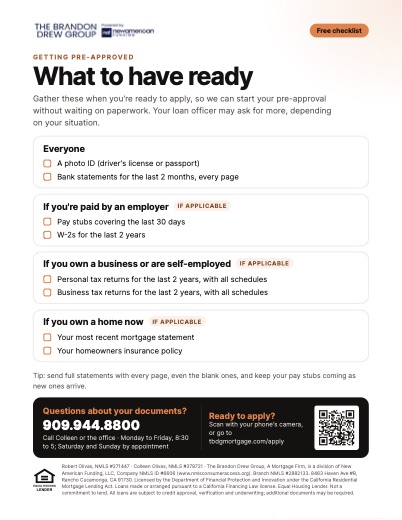 Free checklist · PDF · one pageWhat to have ready
The documents to gather when you're ready to apply, so we can start your pre-approval without waiting on paperwork.
Download the checklist
Questions buyers ask
What is the difference between earnest money and a down payment?
Earnest money is the deposit you make early, after the seller accepts your offer. The down payment is the full amount of your own money you put toward the price at closing. The deposit is usually counted toward the down payment and your cash to close, so you do not pay it twice. The amounts are negotiated or set by your loan, and they can be different. The CFPB's Loan Estimate subtracts any deposit you have already paid when it shows your cash to close (CFPB, checked October 28, 2026). Ask your agent and your lender to show you how the two fit together.
Who holds my earnest money in California?
In general, the escrow holder named in your purchase contract holds it. That is a neutral party, such as an escrow company or title company, and it follows the written instructions of both sides. In general, the seller and the agents do not hold it. Confirm the escrow holder's name and the delivery instructions with your agent, and call the escrow office on a trusted number before you send money.
How much earnest money do I need to put down?
The amount is negotiated between the buyer and the seller, and it is written into your offer. Your agent will advise based on the local market. Pick an amount you can afford to risk, and make sure you still have the rest of your cash to close and a cushion. Before you write an offer, we can look at your cash with you so the pieces fit.
Can I get my earnest money back if I change my mind?
It depends on your contract and your contingencies. If you cancel for a reason your contract allows, while the protection is still open and you follow the contract's steps in time, you may get the deposit back. If you cancel after removing contingencies with no legal reason, the seller may be entitled to keep it. Ask your agent to explain each deadline, and ask an attorney about your contract.
→ Read: What underwriters look for
What does California Civil Code 1675 say about deposits?
In plain words, for an owner-occupied home of up to four units, a liquidated damages amount that was actually paid is presumed valid if it is no more than 3% of the purchase price. Above 3%, the clause is invalid unless the person enforcing it shows the amount is reasonable. It applies to a specific kind of clause. It does not decide whether you may cancel. The clause must also be separately signed or initialed by each party and, in a printed contract, set in at least 10-point bold type or in contrasting red print in at least 8-point bold type; otherwise it is invalid. This is general information, not legal advice; ask a real estate attorney about your contract.
Can I use gift funds or assistance for my earnest money?
Sometimes, but it depends on the loan and the program. Lenders must document where your money came from, and gift funds follow rules about who may give and what paperwork is needed. For conventional loans, Fannie Mae requires a signed gift letter and does not allow gifts from anyone tied to the builder, developer or real estate agent. Assistance programs have their own timing, so do not assume one can cover your deposit before escrow opens. Tell us before you write the offer so the plan matches. Assistance has eligibility rules and is subject to availability.
Can new debt or a job change put my deposit at risk?
It can. If your finances change during escrow, the lender may not be able to approve the loan as planned. If that happens after you removed the loan contingency, your deposit may be at risk. Do not open new credit, make large purchases or change jobs without calling us first. Your debts compared with your income are a big part of what the lender reviews.
→ Read: Debt-to-income ratio, explained
Does it cost anything to talk with your branch before I make an offer?
No. There is no charge for a first conversation or for a pre-approval. We can talk about your cash, your goals and where your loan might stand before you write an offer. Ask us at the first call about anything that would involve a cost, and we will explain it in plain words. Ask any lender for its fees in writing before you start, and compare them line by line. Your agent will cover how the market works, and an attorney can explain your contract.
Sources8 sources · show all
- California Civil Code section 1675, official text (leginfo): https://leginfo.legislature.ca.gov/faces/codes_displaySection.xhtml?lawCode=CIV§ionNum=1675
- California Civil Code sections 1675 and 1677, public copies read for this page: https://california.public.law/codes/civil_code_section_1675 and https://leginfo.legislature.ca.gov/faces/codes_displaySection.xhtml?lawCode=CIV§ionNum=1677
- Consumer Financial Protection Bureau (CFPB), Closing Disclosure: https://www.consumerfinance.gov/owning-a-home/closing-disclosure/
- CFPB, Loan Estimate: https://www.consumerfinance.gov/owning-a-home/loan-estimate/
- FBI Internet Crime Complaint Center (IC3), public service announcement on wire fraud: https://www.ic3.gov/PSA/2023/psa230609
- Fannie Mae Selling Guide, gifts (B3-4.3-04) and large deposits (B3-4.2-02): https://selling-guide.fanniemae.com
- California Housing Finance Agency (CalHFA), rates and reservations: https://www.calhfa.ca.gov/homeownership/rates/index.htm
- NMLS Consumer Access: https://www.nmlsconsumeraccess.org
Disclosures
Robert Olivas, NMLS #271447. Colleen Olivas, NMLS #379721. The Brandon Drew Group, a division of New American Funding, LLC, Company NMLS ID #6606 (www.nmlsconsumeraccess.org). Branch NMLS #2882133. 8463 Haven Avenue, Suite B, Rancho Cucamonga, CA 91730.
Equal Housing Lender.
Licensed by the Department of Financial Protection and Innovation under the California Residential Mortgage Lending Act. Loans made or arranged pursuant to a California Financing Law license.
This is general information, not legal advice; ask a real estate attorney about your contract. We are a mortgage lender, not a law firm or a real estate brokerage, and this page does not create an attorney-client relationship. Contract terms, laws and forms change and differ by transaction. Examples are made up and for illustration only. This is for information only. It is not a commitment to lend or a rate quote. Loans are subject to credit approval and underwriting. Down payment assistance programs have eligibility rules, funds are limited and subject to availability, and they are not available to everyone. Not tax advice. For licensing information, visit www.nmlsconsumeraccess.org.